
We sat down with Urban Rivers’ Co-Founder and Executive Director, Nick Wesley, to discuss how the organizing is filling a massive gap to restore and protect urban rivers in Chicago.
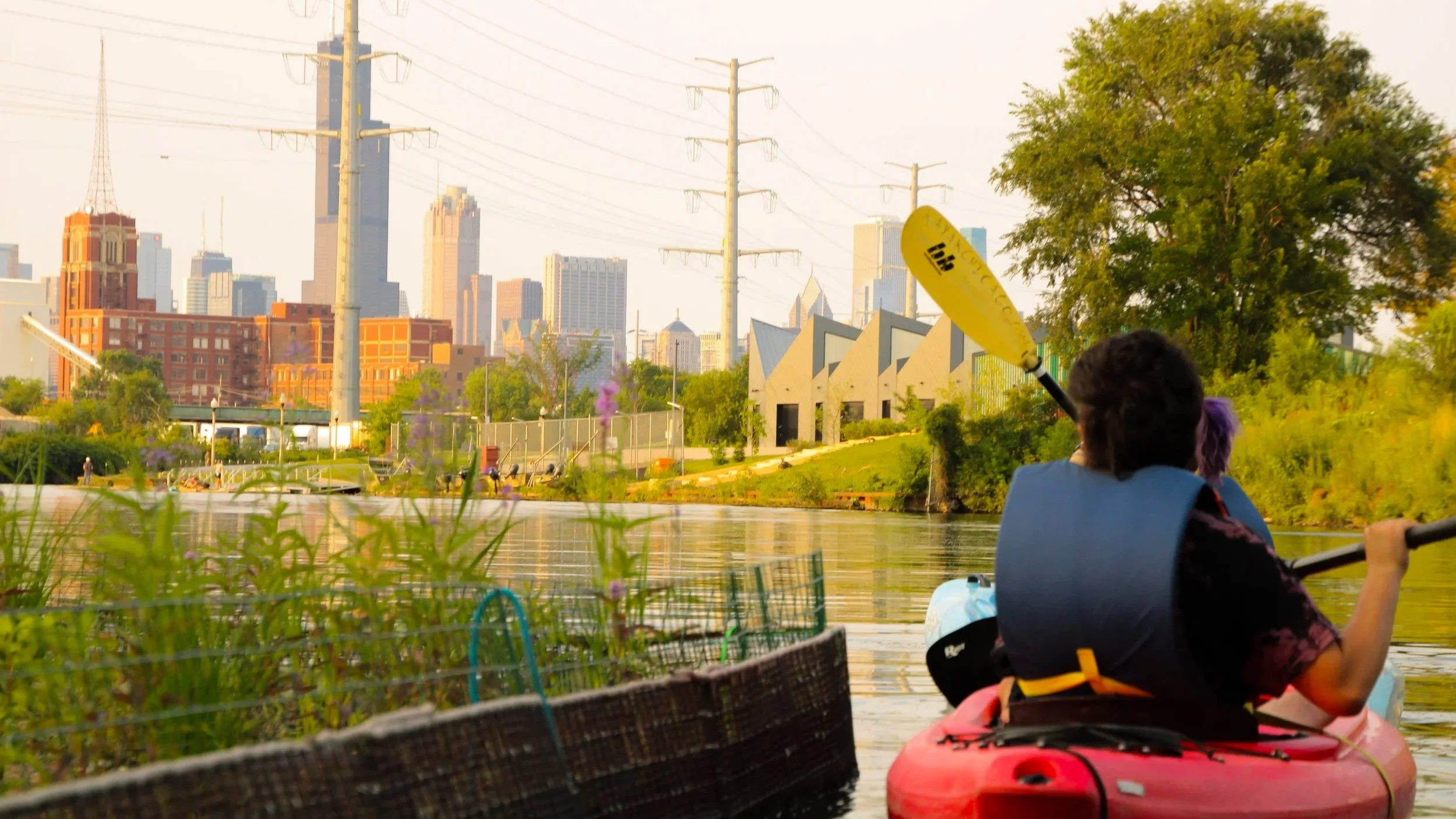
For most urban residents, it is generally taken for granted that their jungle is made of concrete. That aside from the park here and there or the odd tree or shrub, their tree is the skyscraper, their wildlife the rat and the pigeon.
In particular, river areas within urban zones can become neglected: shadows of former industrial usage, of an era where waterways, particularly rivers, were still the primary means of getting goods in and out of urban areas.
The often grim sight of water snaking down sheet metal walls is common, a reminder of the environmental degradation that many urban residents might consider better to simply not think about. It’s easier, after all, to pay no mind the price being paid by waterways for their proximity to urban life, to blot out of one’s mind all the runoff and decay.
In other words, neglected waterways are yet another way in which the modern city invites and encourages a profound sense of ecological dissociation.
Urban Rivers is looking to help change that and, indeed, change the broader relationship we have with the natural world in urban landscapes, renewing river areas in Chicagoland through proven ecological restoration techniques as well as community engagement and education, seeking ultimately to transform city rivers into natural urban sanctuaries.
People Actually Doing Stuff: Nick Wesley, Executive Director of Urban Rivers
Meet Urban Rivers, the Chicago organization restoring wildlife habitat and creating community green spaces along the city’s waterways, including the Wild Mile.
Hyvemind
See above: Hyvemind sat down with Nick Wesley, Co-Founder and Executive Director of Urban Rivers, to talk more about the work and what it means not just for the rivers, but for each of us navigating a time of climate collapse.
“The mission of Urban Rivers is to transform urban waterways into wildlife sanctuaries,” Wesley told Hyvemind. “Many post-industrial cities have developed around the rivers. Most that have a functional river have really manufactured the river to suit the purposes of industry.”
“And so our goal is to take this kind of landscape and build floating parks that emulate a lot of things you would find, all these natural processes,” Nick continued, explaining that the ‘floating park’ concept is meant to not only beautify urban rivers for residents—to create spaces of repose, meditation, education, and natural connection—but to recreate and restore habitats for local wildlife that otherwise would have been there.
Urban Rivers call these ‘Wild Miles,’ a developing concept for how urban river areas can not just become parks and wildlife areas, but for how those efforts can be duplicated across the country.
While these efforts are still localized to the Chicago area, the hope is for it to become a replicable model across post-industrialized American cities, or really any urban environment with a neglected river that requires not only habitat restoration, but urban beautification.
Urban Rivers should have a good shot, because the results have already been remarkable.
“It's fantastic. I mean the resilience of a lot of the species out here is is kinda crazy. You know, I remember our first year when we did some milkweed and saw monarchs coming back like within that first year. That was fantastic and surprising, you know? You don't expect it to actually work that that quickly,” Wesley said, explaining that over a brief period, Urban Rivers work has seen the return of beavers, muskrats, and other wildlife that were once urban rarities.
It may feel like a relatively small victory in the face of what is today widely scientifically understood as an extinction crisis across global ecosystems. But, the key thing about actually doing the work of natural restoration is that you see and feel the benefits firsthand.
Nick’s experiences with native species bouncing back faster than one would expect mirrors my own experiences working with Wild Ones.
The planting of native species—many of which will grow like weeds the moment they’re given an opportunity and space to flourish—has a transformative effect on your connection with your local landscape and its vibrance that can be shocking: several species of pollinators and birds will suddenly become commonplace in your corner of the world, many of which you didn’t even know lived so near.
They’re indeed there. They’re ever searching and waiting for the world they know to return. And we can each, in our own way, be stewards and give back to landscapes we’ve collectively taken too much from.
In that way, Urban Rivers is another welcome addition to a growing network of organizations taking our rapidly developing understanding of what the natural world actually needs from us and putting it into practice.
One yard may not transform the global environmental crisis. But as the movements grow, hundreds, thousands, even millions of acres of land being ecologically restored within a natives-first framework absolutely can transform our world, creating not just peace for ourselves as we restore a functional and spiritually fulfilling relationship with the land, but enacting that little bit of justice for the thousands of native species that need their homes back.