
We've Transgressed 7 of the 9 Planetary Boundaries Necessary For a Habitable Life on Earth. We Must Act Now.
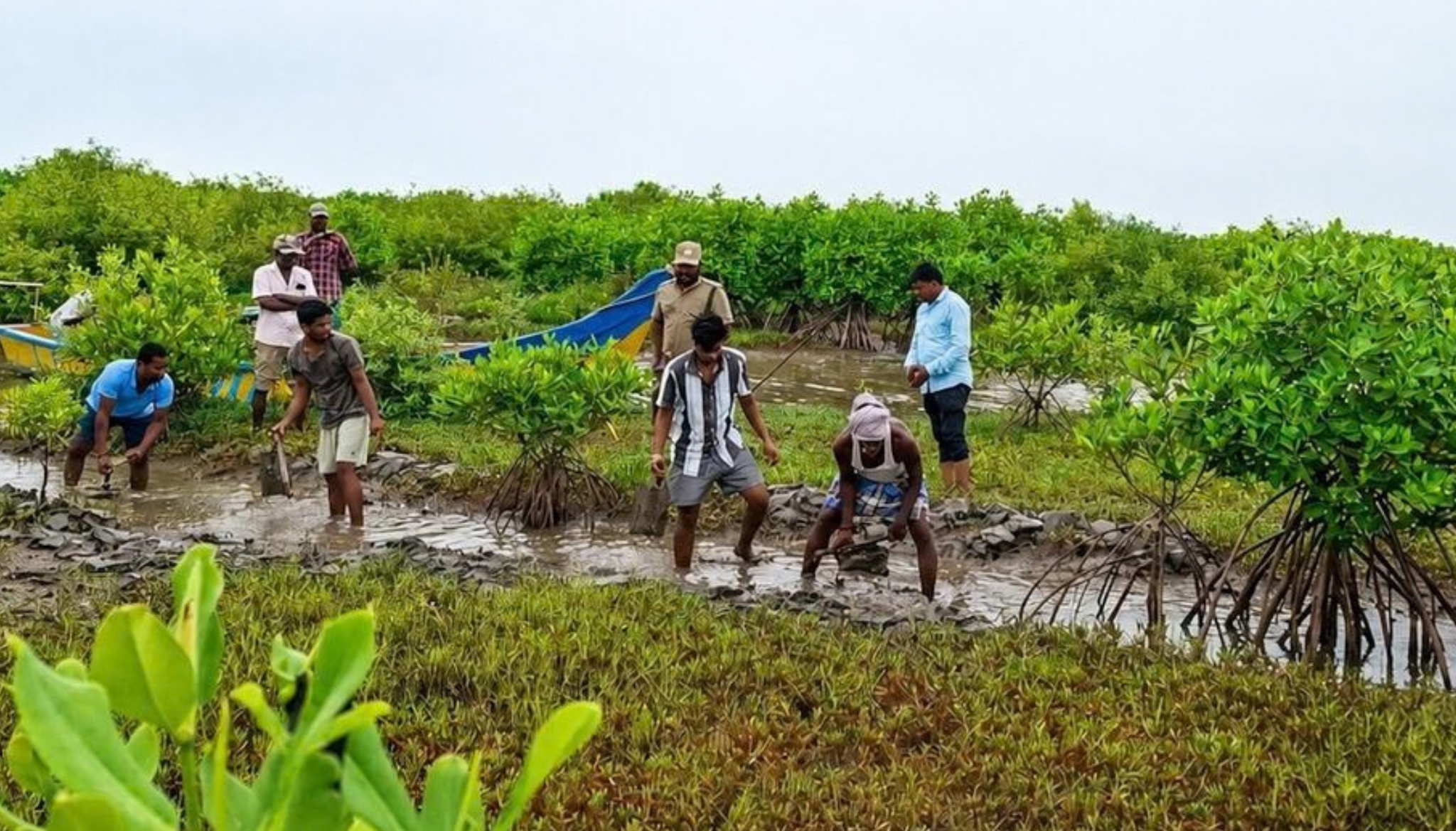
For millions across Africa and the developing world, the biodiversity crisis is already reshaping daily life through depleted soils, declining harvests, disappearing fish and ecosystems pushed beyond their limits.
UNDP India / Samuel Bathula
Get the story, the context and somewhere to go with it in 5 mins or less.
Read more storiesEarth’s life-supporting systems are breaking down around us
In 2009, a study published in Nature argued that there were nine "planetary boundaries that must not be transgressed" in order to prevent "unacceptable environmental change." It was a polite way of saying 'if we keep going this way, we and millions of others species may all die.'
The nine boundaries cover some of the biggest forces shaping the planet: biosphere integrity, novel entities such as synthetic chemicals, climate change, biogeochemical flows, freshwater change, land-system change, ocean acidification, atmospheric aerosol loading and stratospheric ozone depletion.
Today, seven of those nine boundaries have been crossed, according to the latest Planetary Health Check from the Planetary Boundaries Science Lab. That means seven of the Earth systems scientists identified as essential to a stable, habitable planet have moved beyond their designated safe operating space.
Understanding the planetary boundaries
A closer look at the planetary boundaries and the Earth systems that keep our world habitable.
Video
Reports Scientific American, compared to a pre-industrial average of 280 ppm for carbon dioxide concentrations in the atmosphere, we now sit at 425 ppm, which is well beyond the 350 ppm limit scientists designated as safe (and which was surpassed all the way back in 1987). That's bad, but in contrast to how climate change and the broader environmental crisis is often discussed, it's about much more than carbon.
Industrial runoff from agriculture and other forms of production are flooding arable land, streams, rivers, prairies, fields, forests and oceans with synthetic chemicals that carry direct and devastating impacts on biosphere integrity and human health.
Biosphere integrity, particularly in the form of genetic diversity, is plummeting with consequences that aren't fully understood yet, but which carry dire implications for the future habitability and overall health of natural environments, to say nothing of what this shocking plummet in biodiversity means for research and development in fields like medicine.
Perhaps most alarming is the acidification of the ocean, which first saw indicators of boundary transgression in 2025. And while aerosol decline is positive and one of two remaining intact planetary boundaries, it has been attributed to efforts to reduce pollution from global shipping which have inadvertently resulted in "substantial radiative warming;" notes a 2024 study in Communications Earth & Environment, "The amount of radiative forcing could lead to a doubling (or more) of the warming rate in the 2020s compared with the rate since 1980."
This is because all those aerosols in the atmosphere had a cooling effect, providing another example of how the human systems that influence the climate are deeply interrelated.
Why this news matters
These changes are disastrous, actively causing major disruptions to our climate that are not future hypotheses or theoretical, but real-time impacts with real costs in human lives. Now. In 2026. Not 2100. Excessive warming in 2026 resulted in at least 35,000 excess deaths in Europe, a figure that doesn't include August and doesn't capture all of Europe (and so is ultimately cutting way below the mark).
More recently, estimates for the impact of El Nino moving forward from the University of Chicago's Climate Impact Lab suggest a shocking 451,000 more heat-related deaths to occur as a result by the end of February. That's more than twice the casualties of the famous Battle of the Bulge or Battle of Okinawa. That's just the human cost; due to human activity, we are already well into the sixth mass extinction.
Take Action
So, what can we do?
The climate crisis demands organized, sustained action. Find people doing the work, follow the policies shaping our future and find ways to participate where you live.
Start here
Find an organization you can plug into.
Explore these organizations’ work on climate accountability, environmental law, grassroots organizing and
climate justice, and look for ways to donate, participate or volunteer.
Use your vote
Know where candidates stand.
Elections determine who has the authority to write laws, approve budgets, appoint regulators and shape environmental policy. Research candidates’ public statements and records on climate, energy, environmental protection and the communities affected by these decisions. Pay attention to local and state races, where environmental policy is often decided.
Organize
Demand the policy changes this crisis requires.
Organized communities can apply pressure between elections by joining campaigns, attending public meetings, contacting lawmakers, submitting public comments and supporting efforts demanding climate action.